COMING HOME: “Where you been, man?”
A homecoming story… with Chris Waters & Christopher Henrikson
A recent podcast conversation with Christopher Henrikson, founder of Street Poets Inc. in Los Angeles, was so rich that I wanted to return to some of the stories within it.
This first is about losing our way, listening to the things that call us back, and how a painful experience in Hollywood unexpectedly led Christopher into volunteering a juvenile detention centre — and towards the work that would change his life.
Our conversation has been lightly edited for clarity (removing ums and repetitions for example) and to follow this particular thread. You can listen to the full conversation via the link at the end, and the other stories that I’ll publish here.
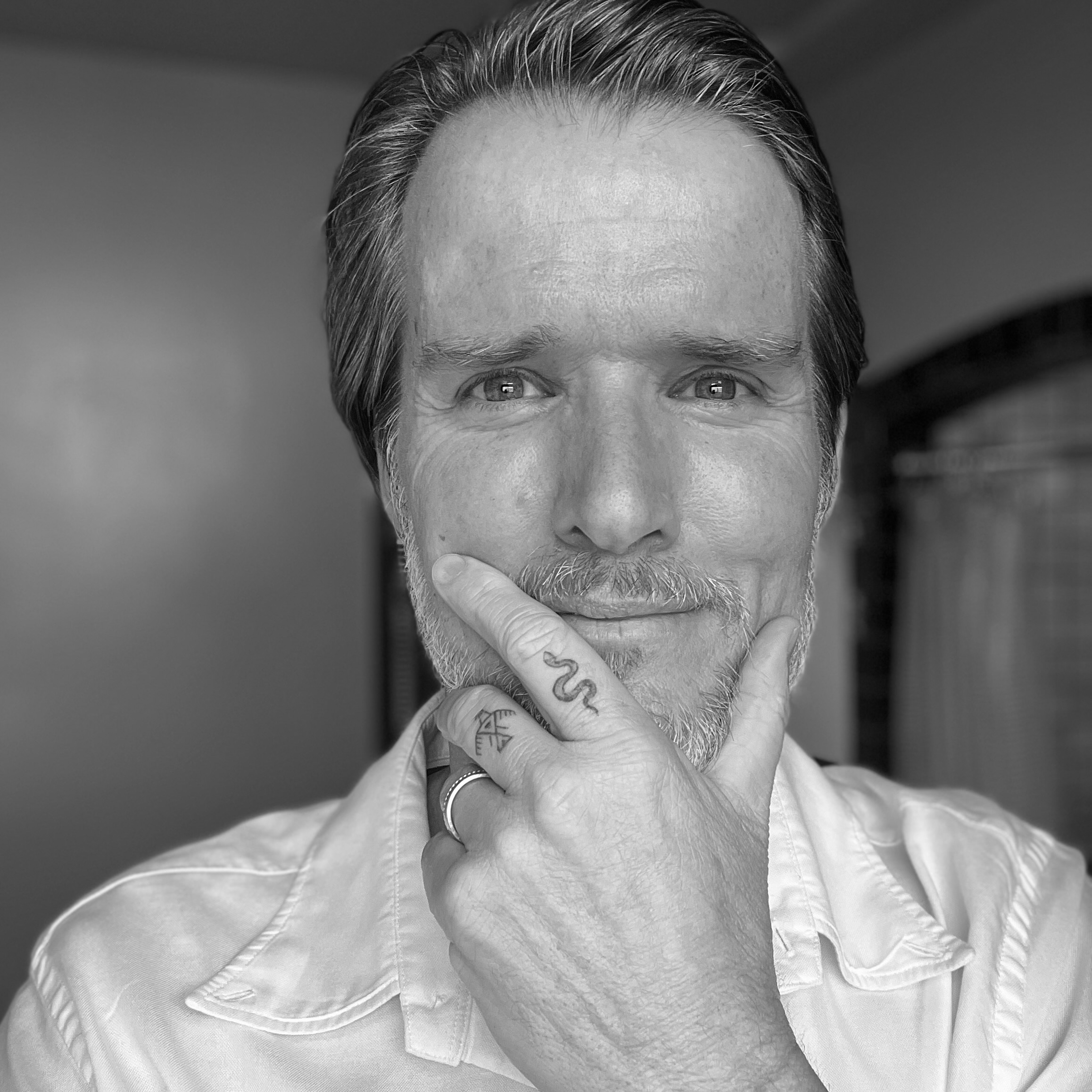
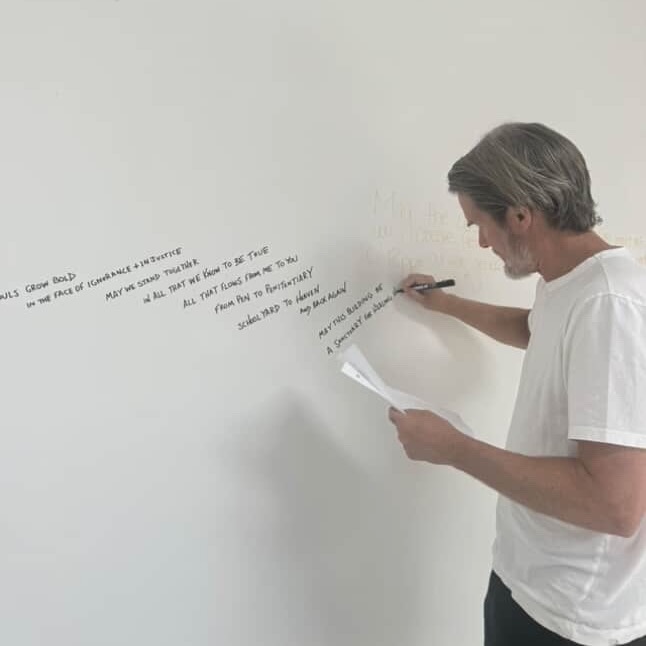
Chris Waters:
So Chris, that long road that you’ve been on since I first met you. How did it all start?
Christopher Henrikson:
The Street Poets origin story! I was a writer. I moved from Boston on the East Coast of the United States to Los Angeles, like many people, pursuing my Hollywood dreams. And I went to film school and I was a writer. I’d been writing for the stage and was hoping to begin writing for the screen. And to make a long story short, I had a successful script sale out of film school and spent about three years turning what was the love of my life – this passion for the creative process and particularly this screenplay that I’d written – into something wholly unrecognisable, while getting paid quite a bit of money to do that.
And in the wake of that betrayal really, which is how I’ve come to understand it, I started volunteering in one of the Los Angeles County probation camps, which is basically a juvenile detention facility for boys. And I started teaching a poetry-writing workshop once a week as a volunteer up in the mountains above Los Angeles.
And it took over my life over the course of about three years of volunteering. I built a lot of relationships with these young men, most of whom were gang involved, most of whom had experienced a lot of trauma in their past. And we’re going right back out of the facilities where I met them, in into an environment that was incredibly unstable and violent and where all the fire that had first put them behind bars was still burning very brightly. And this is the late 90s in Los Angeles. The gang situation in LA was was really out of control at that time. That culture was being glamorised by the entertainment industry, and a lot of young people were falling into that life and a very self-destructive kind of spin cycle. After having gotten to know some of these young folks and really fallen in love in a lot of ways with them, I needed some place to stay connected with them when they got released. And my Subaru Outback only accommodated so many of us. So we started looking around for a headquarters in downtown Los Angeles where we could meet in the same way that we had met once behind bars when they were locked up.
And that’s really how Street Poets started.
***
I’m a writer. That’s the one thing I’ve always known about myself growing up was that writing would help centre me and ground me. And when I was in college down at Duke University in North Carolina, I was taking a Modern American Poetry class. And up to that point, I hadn’t really had any experience along these lines reading Walt Whitman’s Leaves of Grass… and I had this experience, I guess you would call it a transcendent experience where I was reading his poetry out loud in my dorm room by myself. A voice had called me up to my dorm room to do that, and I left a party to go up there, and I started reading this poetry out loud. And it became like an invocation, and I had an experience which completely startled me at the time, which was that it felt like Walt Whitman’s spirit came into the room. Like he was sitting next to me. And then it actually felt like his spirit – that we had somehow merged – and as I was reading the poetry, it was as if Walt Whitman was. I understood every word, because it felt like I had written it. It was like this wild, almost like a channeling type of experience.
And it left me in an ecstatic state.
I went down to the party afterwards trying to find a fraternity brother of mine that I could talk to about it. They all thought I was on some drug or another. They were convinced I had lost my mind.
I was of course completely sober but in this wild ecstatic state, I was even aware at the time, this is not going to last, this feeling, and I don’t really have any place to put this but I’m just going to kind of file it away.
And it was that memory that reawakened in me or stirred in me at the point of crisis that I had reached as a screenwriter in Los Angeles about six or seven years later when I had kind of sold my soul to the Hollywood Studio system. And I got this opportunity to start working with youth in the county system.
They wanted me to teach screenwriting actually, and I told them, “No – I’m not going to teach screen. I’m going to teach poetry.”
Because I intuitively knew that there was something magical and transformational in the practice of poetry. And I had this sense that that’s what these young people needed more than any screenplay writing class I could offer them. So it was perhaps a little less practical in terms of its application to a career path, but I’m very glad I made that choice, because it actually opened the door to both healing for me and for those I was working with, but also to community. It became that idea that “community is the fruit born from shared brokenness”; it’s a quote I believe by Henry Nouwen. That practice and poetry itself has a kind of interdimensional quality to it that really opened up a portal to what became the next 25 years of my life and work in Los Angeles.
Chris Waters:
How did the guys take to the poetry?
Christopher Henrikson:
I went up there the first time, expecting to have to do a big sales pitch: ‘this is how poetry can change your life, this is why poetry is a good idea…’ And actually what happened was the director of the camp up there had identified a group that was interested in poetry and that wanted to be part of a writing workshop. And in that first group I had I think seven young people. Three of them already had poems that they’d written that they wanted to share with me. And then another two were rappers, had written lyrics.… there’s a lot of overlap there. A kinship. So it was like the universe was waiting for me to show up in a way.
And then, interestingly, one of the guys in that workshop asked me as he was leaving after that first two-hour session, he turned around and he said: “Where you been, man? I’ve been up here for six months and we haven’t had any opportunities to do anything like this.”
And I remember thinking, that’s kind of a strange thing for him to ask.
But also it felt like the universe asking me that question.
I had been a little lost in in the world, and it was a kind of homecoming for me as well. And so I just kept going back because it was the place where I felt most present in my life at that point.
And then I just wanted to be that present in more of my life.
Listen to the full podcast (episode 23).
